McGinty's Ascent Productions
SHEILA GAIL O'ROURKE, MFA, PhD
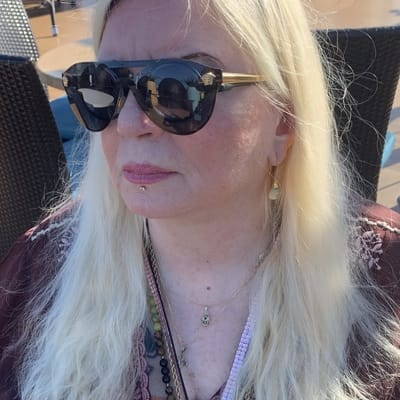
Filmmaker | Visual Anthropologist | Documentary Artist
My documentaries explore interdependent systems where land, water, culture, and art shape one another across histories. I center relations of socio-economic power to examine the ethical stakes of cultural diversity, environmental crisis, animal rights, and community life. My practice blends ethnographic research, observational filmmaking, and public humanities with sustained attention to place, letting form arise from local textures, voices, and relationships. In my frames, beauty and vulnerability coexist in a focus on communities and ecologies under pressure at the edges of public attention.
I hold a PhD in Anthropology from the University of California, Irvine, and a MFA in Visual Arts from the University of California, San Diego. My films and videos have screened internationally at festivals, academic venues, and public platforms.
My documentaries explore interdependent systems where land, water, culture, and art shape one another across histories. I center relations of socio-economic power to examine the ethical stakes of cultural diversity, environmental crisis, animal rights, and community life. My practice blends ethnographic research, observational filmmaking, and public humanities with sustained attention to place, letting form arise from local textures, voices, and relationships. In my frames, beauty and vulnerability coexist in a focus on communities and ecologies under pressure at the edges of public attention.
I hold a PhD in Anthropology from the University of California, Irvine, and a MFA in Visual Arts from the University of California, San Diego. My films and videos have screened internationally at festivals, academic venues, and public platforms.
WORK IN PROGRESS
Who Governs the Aquifer?
Power, Representation, and California's Groundwater Crisis
What happens to “sustainability” when the agencies managing an overdrafted aquifer are led by those most empowered to extract from it?
WHY NOW: California's Sustainable Groundwater Management Act (SGMA), one of the most consequential environmental reforms of this century, has reached a pivotal moment. As implementation shifts from planning to enforcement, the groundwater sustainability agencies created to manage overdrafted aquifers are making decisions that will determine access to water to impact farms, rural households, tribal communities, towns, and entire ecosystems for decades.
* *. *.
Who Governs the Aquifer? is a documentary film in progress about groundwater and the forms of power that gather around what cannot be easily seen. Expanding my earlier film, Dry Wells of the Paso Basin: A Tragedy of the Commons, into a broader inquiry, the project begins with a question of visibility: how do you film a resource that is subterranean, shared, and known primarily through its depletion? I approach groundwater not only as a material condition, but as a problem of cinematic form. It lies below perception, yet it organizes landscapes, institutions, and everyday life.The film compares selected Groundwater Sustainability Agencies (GSAs) from the more than 260 established under California’s Sustainable Groundwater Management Act of 2014 to govern the state’s aquifers. As SGMA moves from planning toward enforcement, these agencies are negotiating decisions that will shape rural households, farms, Tribal communities, ecosystems, and towns for decades. I am interested less in policy than in the way power takes form through procedure and representation. The film asks how authority is performed, how exclusion is normalized, and who absorbs environmental loss.
I think of GSAs as hydro-social networks: constellations of land, law, infrastructure, and unequal influence. Many are shaped by large agricultural interests, water districts, developers, county authorities, and other local elites, while only 12% include working people, small farmers, or Tribal members in decision-making positions. The project asks what becomes visible in one structure of representation and what disappears in another. It asks whose claims enter the public record, whose speech carries weight, and whose losses are made ordinary.
My visual approach is observational. I am drawn to agricultural landscapes, public meetings, pumps, dry domestic wells, and the everyday spaces of families living with uncertainty. These are not separate worlds but interwoven ones. Through image, sound, and musical themes, the film will bring institutional interiors into contact with lived environments without collapsing one into the other.
At its core, Who Governs the Aquifer? is about democracy at the edge of perception. It asks how a shared resource becomes subject to systems of management that claim neutrality while distributing vulnerability unevenly. More broadly, it asks what documentary film can do when its subject is not an event but a condition, not a spectacle but an infrastructure, not only a water crisis, but a crisis of representation.
DRY WELLS OF THE PASO BASIN: A TRAGEDY OF THE COMMONS
2024
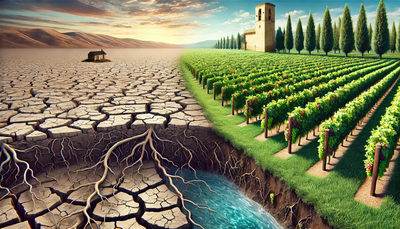
A tragedy of the commons occurs when an individual or group uses more than their share of a publicly owned resource for their self-interest, which leads to the depletion of the resource for the entire community. (William Foster Lloyd, 1833; Garret Hardin, 1968)
This film situates "the tragedy" of dry domestic wells as a governance problem: who has pumping rights, who can drill deeper, who sits on the Groundwater Sustainability Agency, whose losses count, and whose extraction is normalized.
__________________________
Beginning in the 1990s, agricultural corporations and investors began buying thousands of acres of land with water rights in San Luis Obispo County’s pastoral wine country. They planted new vineyards and drilled dozens of 800-foot-deep wells, pumping water from the Paso Robles Groundwater Basin into vast irrigation ponds. As vineyard expansion, population growth, and climate change intensified pressure on the aquifer, 200- to 400-foot wells that had long sustained homes, small farms, and ranches began to run dry.
For small landowners, a dry well is both an environmental crisis and an economic trap. Drilling deeper can cost $80,000, yet without water, land often loses the collateral value needed to finance a new well. Dry Wells of the Paso Basin follows three landowning women whose livelihoods, properties, and hopes for the future have been threatened by their failing wells. Their stories expose the collapse of pastoral dreams as vineyards expand, the basin is governed, and access to groundwater becomes unequal.
Through observation and attention to local political struggles, the film examines how ordinary residents confront the corporate, environmental, and governmental forces reshaping access to the Paso Basin. Scenes of dry taps, empty holding tanks, vineyard irrigation ponds evaporating in the sun, county meetings, and everyday acts of endurance reveal water not as an abstract resource, but as the condition of domestic life, land value, and political voice.
Working on the film pulled me into new terrain where the myth of Western self-reliance meets the reality of shared ecological dependence. Groundwater emerged not only as an environmental, political, and economic issue, but as a moral field. Music became a structural and emotional force, with motifs for each woman and Debussy’s The Sunken Cathedral as a tonal evocation of the aquifer itself: hidden, under pressure, and haunted.
At its core, the film asks what happens when those with the least power to deplete an aquifer bear the greatest burden of its overdraft.
DRY WELLS IS AVAILABLE FOR VIEWING ON:
https://vimeo.com/manage/videos/1199510417
SELECTED SCREENINGS
- The World Water Film Festival, Chicago, Illinois, May 5, 2026.
- Cinema Verde Environmental Film and Arts Festival, Gainesville, Florida, April 20, 2025.
- Mysuru International Water Film Festival, Bangalore, India, June 22, 2025.
- Depth of Field International Film Festival, August 17, 2025.
- Seattle Film Festival, Seattle, Washington, September 9, 2025.
- LA International Art Film Fest, Lee Strasberg Theater and Film Institute, Hollywood, California, October 29, 2025.
- WRPN Women's International Film Festival, Rehoboth Beach, Delaware, December 1, 2024.
AWARDS
- "Best of Show," Depth of Field International Film Festival.
- "Best Environmental Film," LA International Art Film Fest.
- "Best Feature Film," Mysuru International Water Film Festival.
- "Best of Festival," WRPN Women's International Film Festival.
BOMBAY BEACH SOIREE
2025
Set to Nathaniel Mayer’s R&B classic “Village of Love,” this music video reimagines the song’s theme of communal belonging through the residents of Bombay Beach, a desert town on the shore of the polluted Salton Sea. Against a landscape of shoreline ruins, Dadaesque art, and ecological decline, the film shows how artistic expression and environmental concern become forms of survival that allow a fragile community to hold itself together in a decaying but cherished place.
"BOMBAY BEACH SOIREE" IS AVAILABLE FOR VIEWING ON:
https://vimeo.com/manage/videos/1218934534
SELECTED SCREENINGS
AWARDS
"BOMBAY BEACH SOIREE" IS AVAILABLE FOR VIEWING ON:
https://vimeo.com/manage/videos/1218934534
SELECTED SCREENINGS
- San Diego Film Awards, the Museum of Photographic Arts, San Diego, California, January 15, 2026.
- AI International Music Video Festival, Hollywood, California, January 25, 2026.
- San Jose Independent Film Festival, San Jose, California, January 27, 2026.
- Paris Film Awards, Cinema L'Epée de Bois, Paris, France, May 5, 2026.
- Tarzana International Film Festival, Tarzana, California, September 2, 2026.
AWARDS
- "Award of Excellence for Best Music Video," San Diego Movie Awards.
- "Honorable Mention for Best Editing," AI International Music Video Festival.
- "Gold Award," Paris Film Awards.
JETTY CATS
2017
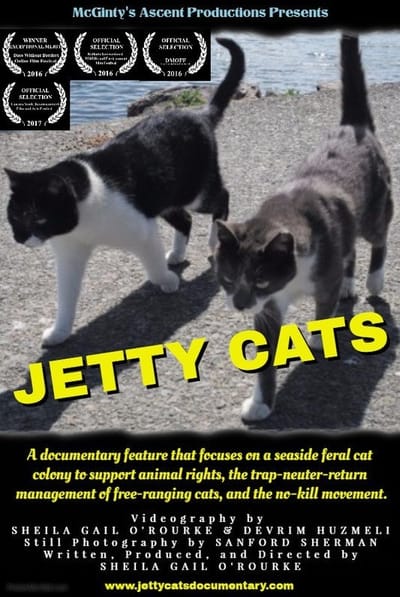
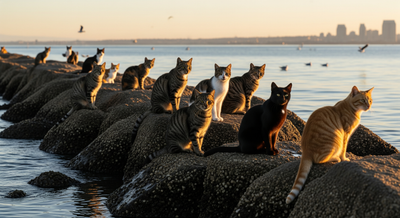
On a rocky seaside jetty in San Diego, California, a colony of feral cats has survived for decades between ocean, tourism, and human care. Jetty Cats is a feature-length documentary that uses this colony as a lens onto contemporary animal rights debates to ask: what do humans owe to animals who live outside the boundaries of home, shelter, and wilderness?
The film focuses on the conflict over trap-neuter-return, or TNR, a practice in which feral cats are trapped, sterilized, vaccinated, and returned to their outdoor colonies. Supporters understand TNR and no-kill sheltering as humane alternatives to mass euthanasia; opponents argue that euthanasia may be more humane for the cats and more protective of surrounding ecosystems. Rather than treating this debate as abstract policy, Jetty Cats follows caregivers, advocates, critics, and animal welfare leaders whose convictions turn feral cat colonies into charged public questions.
Featuring an exclusive interview with Richard Avanzino, widely known as the “Godfather” of the no-kill movement, the film situates the jetty colony within a national shift in animal shelter ethics and policy. At its center is a question that extends beyond cats: when animals survive in spaces shaped by human abandonment and care, who has the authority to decide their fate?
TRAILER: https://vimeo.com/216685663
JETTY CATS IS AVAILABLE FOR VIEWING ON:
Vimeo
https://vimeo.com/manage/videos/236925723
A feature of The New York Cat Film Festival Vol.1
Amazon Prime
https://www.amazon.com/Cat-Film-Festival-Vol-1/
dp/B0G2J3P55J
Tubi
https://tubitv.com/movies/545573/cat-film-festival-vol-1
SELECTED SCREENINGS
AWARDS
ARTICLES
New York Times
https://www.nytimes.com/2017/12/06/movies/the-ny-cat-film-festival-is-here-and-no-ones-allergic-to-movies.html
Qatar Tribune
https://www.qatar-tribune.com/article/102050/CHILLOUT/The-NY-Cat-Film-Festival-a-big-hitAnd-no-one-39s-allergic-to-movies
The film focuses on the conflict over trap-neuter-return, or TNR, a practice in which feral cats are trapped, sterilized, vaccinated, and returned to their outdoor colonies. Supporters understand TNR and no-kill sheltering as humane alternatives to mass euthanasia; opponents argue that euthanasia may be more humane for the cats and more protective of surrounding ecosystems. Rather than treating this debate as abstract policy, Jetty Cats follows caregivers, advocates, critics, and animal welfare leaders whose convictions turn feral cat colonies into charged public questions.
Featuring an exclusive interview with Richard Avanzino, widely known as the “Godfather” of the no-kill movement, the film situates the jetty colony within a national shift in animal shelter ethics and policy. At its center is a question that extends beyond cats: when animals survive in spaces shaped by human abandonment and care, who has the authority to decide their fate?
TRAILER: https://vimeo.com/216685663
JETTY CATS IS AVAILABLE FOR VIEWING ON:
Vimeo
https://vimeo.com/manage/videos/236925723
A feature of The New York Cat Film Festival Vol.1
Amazon Prime
https://www.amazon.com/Cat-Film-Festival-Vol-1/
dp/B0G2J3P55J
Tubi
https://tubitv.com/movies/545573/cat-film-festival-vol-1
SELECTED SCREENINGS
- Cinema Verde Environmental Film and Arts Festival, Gainesville, Florida, Febuary 9, 2017.
- Glendale International Film Festival, Glendale, California, September 20, 2017.
- New York Cat Film Festival, NYC, New York, December 9, 2017.
- New York Cat Film Festival on Tour, Major U.S. Cities, 2017 - 2018.
- Kolkata Wildlife and Environmental Film Festival, Kolkata, India, September 2, 2016.
AWARDS
- "Compassion Award," Cinema Verde Environmental Film and Arts Festival.
ARTICLES
New York Times
https://www.nytimes.com/2017/12/06/movies/the-ny-cat-film-festival-is-here-and-no-ones-allergic-to-movies.html
Qatar Tribune
https://www.qatar-tribune.com/article/102050/CHILLOUT/The-NY-Cat-Film-Festival-a-big-hitAnd-no-one-39s-allergic-to-movies
THE NEXT PANDEMIC
2022
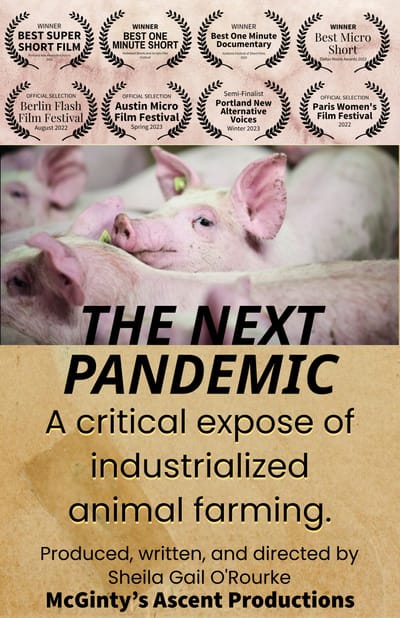
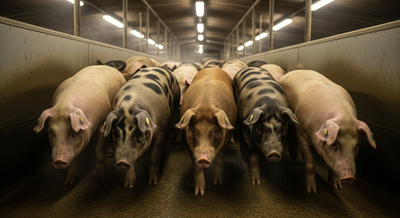
This one minute video juxtaposes images of industrial animal farming with a 1970s Bee Gees love song to expose the emotional dissonance between popular culture’s fantasies of tenderness and the realities of animal confinement. Through this collision of sound and image, the work illuminates the inhumane, disease-producing conditions of factory farming and asks how sentiment, denial, and industrial violence coexist in contemporary food systems.
THE NEXT PANDEMIC IS AVAILABLE FOR VIEWING ON:
https://vimeo.com/764219714
SELECTED SCREENINGS
AWARDS
THE NEXT PANDEMIC IS AVAILABLE FOR VIEWING ON:
https://vimeo.com/764219714
SELECTED SCREENINGS
- Istanbul International Shorts Film Festival, Istanbul, Turkey, April 27, 2024.
- Portland New Alternative Voices Film Festival, Portland, Oregon, Febuary 24, 2023.
- Austin Micro Film Festival, Austin, Texas, March 11, 2023.
- Avalonia Film Festival, Jacksonville, Florida, November 5, 2022.
AWARDS
- "Best Super Short Film," Portland New Alternative Voices Film Festival.
- "Best One-Minute Documentary," Avalonia Film Festival.
BUNGALOW EXPOSE
2012


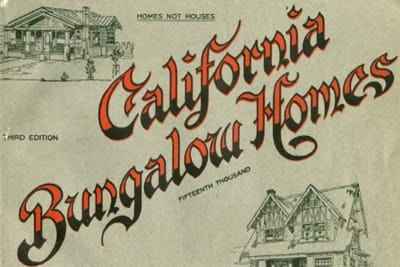
This short video examines a purportedly haunted vintage bungalow in Carlsbad, California, as an intimate archive of architecture, memory, and social history. Opening with the development of the California bungalow and its ideals of domestic life, the work situates the featured house within the broader history of Carlsbad’s transformation from seaside village to a coastal resort community. By tracing the experiences of individuals who owned and inhabited the bungalow over the past 90 years, the video explores how shifts in class, land value, regional identity, and economic development become embedded in the life of a single home.
BUNGALOW EXPOSE IS AVAILABLE FOR VIEWING ON:
https://vimeo.com/manage/videos/104620285
SELECTED SCREENINGS
AWARDS
BUNGALOW EXPOSE IS AVAILABLE FOR VIEWING ON:
https://vimeo.com/manage/videos/104620285
SELECTED SCREENINGS
- Artplay Moscow Film Festival, Moscow, Russia, May 5, 2016.
- LA Underground Film Forum, Santa Monica, California, November 16, 2016.
- Cinemonde Private Film Series, Roger Smith Art Hotel, New York City, New York, May 11, 2015.
AWARDS
- "Honorable Mention," LA Underground Film Forum, Los Angeles, California, 2016.
Contact
- Carlsbad, California, United States